
Flat Fan Nozzles Solutions
Precision Spray Solutions for Cleaning, Coating, Cooling & Industrial Spraying
Explore Flat Fan Spray Nozzle Products
Flat fan nozzles produce a controlled, high-impact spray pattern with uniform liquid distribution. They are widely used in: Surface Cleaning, Pressure Washing, Chemical Spraying, Cooling Systems, Food Processing and Industrial Coating.
CYCO supplies a complete range of industrial flat fan nozzles, including standard, wide-angle, high-pressure, air atomizing, and quick-release designs for demanding spray applications.


Contact Us to Find the Perfect Rotary Spray Ball for Your Application
See Them in Action
Playlist

0:11
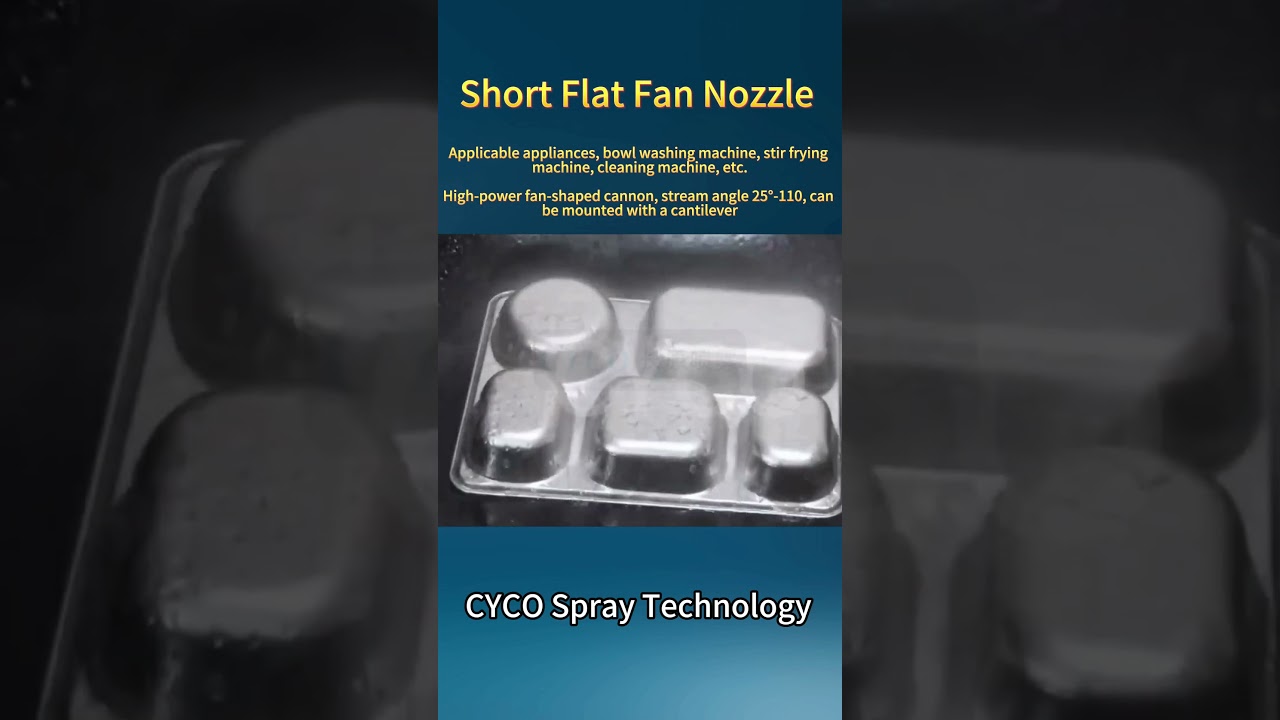
0:20

0:21
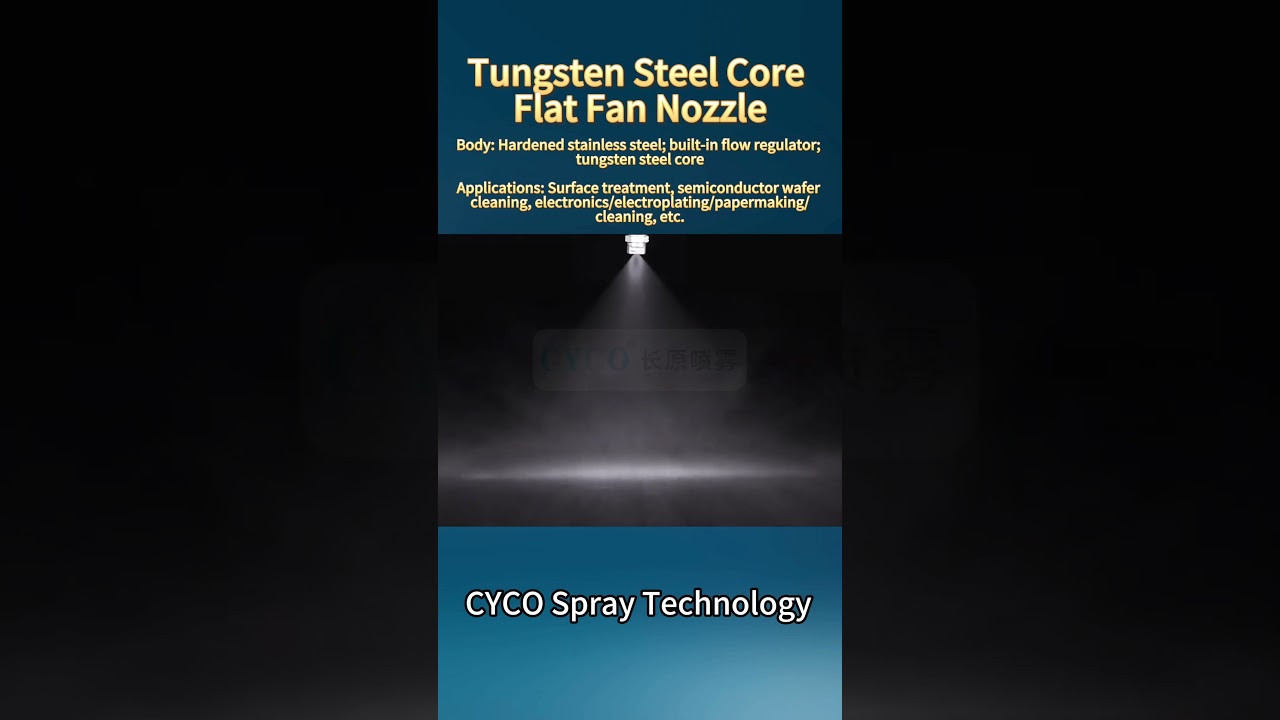
0:19
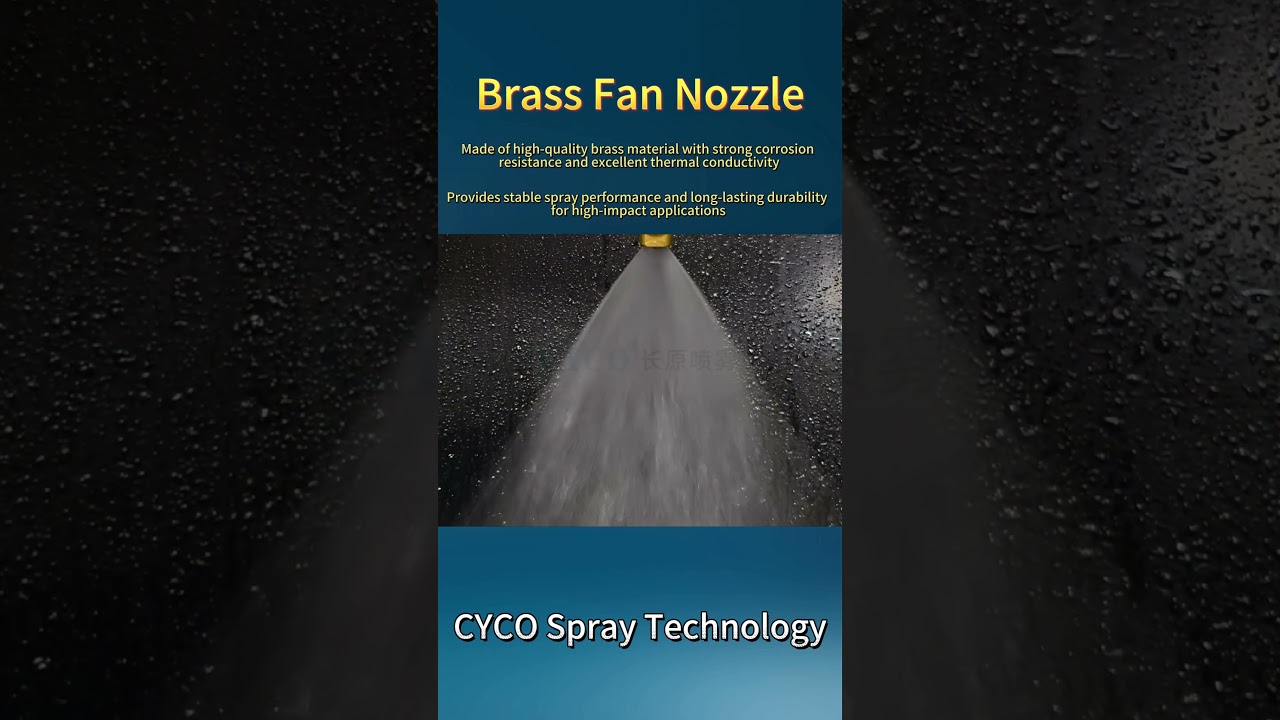
0:27
Flat Fan Spray Nozzles Applications
From precision agriculture to aggressive chemical processing, flat fan spray nozzles deliver consistent performance in the most demanding environments.
🌾 Agriculture
Uniform pesticide and fertilizer distribution across row crops. Minimises drift, maximises coverage with narrow and medium spray angles.
⛏ Metal Processing
Scale removal, cooling, and surface preparation. High-impact flat fan patterns optimised for descaling lines and continuous casting.
🧪 Wet FGD Scrubbers
PVDF and PVC options handle concentrated acids, alkalis, and solvents. Full chemical compatibility charts available for every model.
🚚 Automotive
Pre-treatment wash, rinse, and coating application in body shop lines. Precise angle control ensures consistent film thickness.
🌊 Chemical Processing
Evaporative cooling for gas turbines, compressors, and heat exchangers. Fine droplet sizes engineered for maximum evaporation efficiency.
🏭 Industrial Cleaning
Tank washing, conveyor cleaning, and parts degreasing. Wide-angle flat fan nozzles deliver full-surface impact with minimal water consumption.
Why Choose CYCO Nozzles?
CYCO is a professional industrial spray nozzle manufacturer with over 25 years of engineering and production experience, delivering reliable spray solutions for global industries including cleaning, cooling, coating, chemical processing, and dust control.
With strong in-house R&D and manufacturing capability, CYCO focuses on precision, durability, and application performance across all flat fan nozzle series.
Contact Us
Looking for an efficient flat fan spray nozzle solution?
Contact CYCO today to get professional recommendations and customized nozzle solutions for your application.
Flat Fan Nozzles: Types, Applications & Selection Guide 2026
Industrial spraying systems rely heavily on flat fan nozzles for precise liquid distribution, controlled spray coverage, and efficient surface treatment.
From cleaning and cooling to coating, washing, and chemical spraying, flat fan spray nozzles are widely used across manufacturing, food processing, chemical production, agriculture, and many other industries.
But how does flat fan nozzle work? What types are available? And how do you choose the right one for your application?
This comprehensive guide explains everything you need to know about flat fan nozzles, including working principles, advantages, applications, comparison with other spray patterns, and selection tips.
Table of Contents
1. What Are Flat Fan Nozzles?
Flat fan nozzles are spray nozzles designed to produce a thin, fan-shaped spray pattern.
Unlike full cone nozzles that distribute liquid in a circular footprint or hollow cone nozzles that form a ring-shaped pattern, flat fan nozzles direct liquid in a focused, elongated band across a defined coverage width. It typically ranges from 0° to 120° depending on nozzle design.
The spray pattern resembles a triangle or fan when viewed from the front.

Flat fan nozzles are engineered for applications that require:
- Uniform surface spraying
- Precise directional coverage
- Controlled liquid distribution
- Efficient cleaning and coating
- Targeted impact force
Because of their versatility, industrial flat fan nozzles are among the most widely used nozzle types in industrial fluid handling systems.
Key Characteristics of Flat Fan Nozzle
Typical features include:
- Flat, fan-shaped spray pattern
- Narrow or wide spray angles available
- Controlled droplet distribution
- High-impact or atomizing options
- Multiple material choices
- Easy integration into spray systems
These characteristics make them suitable for both low-pressure precision spraying and high-pressure industrial cleaning systems.
2. How Does Flat Fan Nozzle Work?
The working principle of a flat fan nozzle is relatively simple but highly effective.
Liquid enters the nozzle body under pressure and flows through a specially engineered orifice. Inside the nozzle, internal geometry reshapes the liquid stream into a thin sheet. As the liquid exits the opening, it spreads outward into a flat spray pattern.

Several design factors influence performance
① Nozzle Orifice Design
The orifice determines:
- Spray width
- Flow rate
- Spray uniformity
- Droplet size
Precision-machined openings help achieve stable spray performance.
② Operating Pressure
Pressure directly affects spray characteristics.
Higher pressure generally produces:
- Finer droplets
- Wider atomization
- Stronger spray impact
Lower pressure usually results in:
- Larger droplets
- Reduced atomization
- Lower spray force
③ Spray Angle
Flat fan nozzles are available in different spray angles.
Common options include:
- 15°
- 25°
- 40°
- 50°
- 65°
- 80°
- 95°
- 110°
- 120°
Selecting the correct angle is critical for achieving proper coverage and overlap.
④ Flow Capacity
Different applications require different flow rates.
Flow capacity may range from:
- Low-flow precision spraying
- Medium industrial washing
- High-flow cooling systems
- Heavy-duty cleaning applications
Proper flow selection helps maintain process efficiency and reduce liquid waste.
3. Key Advantages of Flat Fan Nozzles
Why are flat fan nozzles so widely used across industries? The answer lies in their performance advantages.
- Excellent Surface Coverage
Flat fan spray patterns are ideal for covering flat surfaces evenly. This makes them highly effective for:
- Conveyor cleaning
- Surface washing
- Coating lines
- Pretreatment spraying
Uniform coverage helps improve process consistency.
- Controlled Spray Direction
Unlike circular spray patterns, flat fan nozzles provide precise directional control.
Operators can target:
- Specific surfaces
- Narrow treatment zones
- Defined spray paths
This reduces overspray and improves efficiency.
- Flexible Spray Performance
Flat fan nozzles support various operating conditions.
Users can select:
- Narrow or wide spray angles
- Fine or coarse droplets
- Low or high flow rates
- Low-pressure or high-pressure operation
This flexibility enables broad industrial adoption.
- Improved Cleaning Efficiency
In cleaning applications, spray impact is critical.
Flat fan nozzles can generate concentrated impact energy for:
- Dirt removal
- Residue cleaning
- Equipment washing
- Surface preparation
Effective cleaning often means:
- Reduced chemical use
- Lower water consumption
- Shorter cleaning cycles
- Cost-Effective Operation
Many flat fan spray nozzle systems offer excellent operational economics.
Benefits may include:
- Reduced liquid waste
- Lower maintenance requirements
- Improved production efficiency
- Longer service life
Proper nozzle selection can significantly reduce operating costs.
4. Types of Flat Fan Nozzles
Not all flat fan nozzles are identical. Different designs are optimized for specific industrial requirements.
Below are the most common types of flat fan spray nozzles.
Type 1. Standard Flat Fan Nozzles
Standard flat fan nozzles are the most widely used configuration.
They provide:
- Uniform spray distribution
- Reliable directional coverage
- Stable operating performance

These flat fan nozzles are commonly used in:
- Surface cleaning
- Rinsing systems
- Chemical spraying
- Conveyor washing
- Pretreatment lines
Their simple structure makes them economical and easy to maintain.
Type 2. Wide-Angle Flat Fan Nozzles
Wide-angle flat fan nozzles generate broader coverage. They are ideal when large surfaces must be sprayed efficiently.
Common applications include:
- Tank rinsing
- Industrial washing
- Surface wetting
- Dust suppression
- Cooling systems
Using a wider spray angle can reduce the number of nozzles required in a system.
Type 3. High-Pressure Flat Fan Nozzles
Engineered for demanding cleaning, descaling, and cutting applications, high-pressure flat fan nozzles maintain pattern consistency at pressures from 35 bar up to several hundred bar in waterjet configurations.
They operate under elevated pressures to generate:
- Strong impact force
- Powerful surface penetration
- Effective contaminant removal

Typical uses include:
- Pressure washing
- Industrial cleaning
- Equipment maintenance
- Surface preparation
- Degreasing operations
Industries handling heavy contamination often rely on high-pressure nozzle systems.
Type 4. Air Atomizing Flat Fan Nozzles
Air atomizing versions combine compressed air with liquid flow. This creates extremely fine droplets and enhanced spray control.
Advantages include:
- Fine atomization
- Adjustable droplet size
- Precise spray targeting
- Reduced liquid consumption
Common applications:
- Spray coating
- Chemical dosing
- Humidification
- Precision lubrication
- Pharmaceutical processing
Air atomizing flat fan nozzles are preferred where fine spray quality is essential.
Type 5. Quick-Release Flat Fan Nozzles
Quick-release nozzles simplify installation and maintenance. Their tool-free structure allows operators to replace nozzle components rapidly.
Benefits include:
- Reduced downtime
- Faster cleaning
- Easier maintenance
- Improved operational efficiency
These flat fan nozzles are particularly valuable in industries with strict sanitation or production uptime requirements.
Examples include:
- Food processing
- Beverage production
- Pharmaceutical manufacturing
- CIP cleaning systems
Type 6. Adjustable Flat Fan Nozzles
Some flat fan nozzle designs incorporate an adjustable orifice or deflector that allows the operator to change the spray angle and approximate flow rate without replacing the nozzle tip.
These are useful in applications where process conditions change frequently, though they generally cannot match the precision and pattern consistency of fixed-orifice designs.
Comparison of Different Types of Flat Fan Nozzles
Type | Key Feature | Main Applications | Best For |
Standard Flat Fan Nozzles | Uniform spray, stable performance | Cleaning, rinsing, chemical spraying | General industrial use |
Wide-Angle Flat Fan Nozzles | Broad spray coverage | Tank washing, cooling, dust suppression | Large-area spraying |
High-Pressure Flat Fan Nozzles | Strong impact, high penetration | Pressure washing, degreasing, cleaning | Heavy-duty cleaning |
Air Atomizing Flat Fan Nozzles | Fine droplets, precise control | Coating, humidification, lubrication | Fine atomization |
Quick-Release Flat Fan Nozzles | Fast replacement, easy maintenance | Food, beverage, pharmaceutical | Hygienic industries |
Adjustable Flat Fan Nozzles | Adjustable angle & flow | Variable spray processes | Flexible applications |
5. Industrial Applications of Flat Fan Nozzles
Flat fan nozzles are widely used across industrial sectors because of their ability to deliver controlled, uniform, and directional spray patterns. Their versatility makes them suitable for both low-pressure precision processes and high-pressure industrial operations.

(1) Food and Beverage Processing
Conveyor belt cleaning, product washing, surface sanitization, and equipment rinsing all rely on flat fan nozzles.
The uniform coverage pattern ensures that entire belt widths and product surfaces receive consistent wetting and cleaning chemical contact. 316L stainless steel is the standard material of choice for hygienic applications.
CIP (clean-in-place) headers in tank washing and pipe cleaning also use flat fan nozzle where strip-pattern cleaning is required.
They are known for:
- Stable spray performance
- Wide spray angle options
- Reliable operation under varying pressures
(2) Automotive Manufacturing
Parts washing, degreasing, phosphate coating application, and e-coat rinsing are among the most critical flat fan nozzle applications in automotive plants.
High-pressure flat fan nozzles are used in dedicated parts washers to remove machining chips, lubricants, and surface contamination before downstream assembly or coating operations.
(3) Steel and Metals
Steel mills use high-pressure flat fan nozzles extensively for hydraulic descaling, as well as for spray cooling on runout tables and cooling beds.
The combination of high pressure (often 100 to 300 bar) and precisely angled flat fan spray ensures that scale is removed uniformly and that the steel cools at a controlled, consistent rate.
(4) Chemical Processing
Flat fan spray nozzles are used in reactor quenching, scrubber liquid distribution, spray drying preparation stages, and chemical coating lines.
Material compatibility is the dominant selection factor in this sector, and PVDF or 316L stainless steel nozzles are commonly specified.
(5) Agriculture
Boom sprayers for herbicide, insecticide, and fertilizer application represent the largest single application of flat fan nozzles by unit volume.
Standard flat fan and extended-range flat fan nozzles are mounted at regular intervals on the spray boom and operated at pressures calibrated to deliver the correct dose per unit area.
Air-induction flat fan spray nozzles have become increasingly important as regulators tighten drift restrictions on pesticide applications.
(6) Mining and Dust Suppression
Low-pressure flat fan nozzles and specialized flood nozzles are used to suppress airborne dust on conveyors, transfer points, and haul roads.
The wide, even spray sheet provides thorough wetting of large surfaces with minimal water consumption.
(7) Electronics and Precision Manufacturing
Wafer cleaning, PCB rinsing, and precision parts washing use flat fan nozzles with very tight orifice tolerances and consistent pattern quality to achieve uniform liquid contact across delicate surface features.
Ultra-pure water and solvent compatibility require carefully selected nozzle materials.
6. Flat Fan Nozzles in Spray Pattern Selection
When selecting an industrial spray nozzle, it is important to understand how different spray patterns are used in engineering design.
Flat fan nozzles are typically chosen for applications that require:
- Precise directional spraying
- Uniform surface coverage
- Controlled impact distribution

In contrast, full cone and hollow cone spray patterns are generally used in different fluid distribution systems where radial coverage or fine atomization is required.
Instead of comparing each spray pattern in detail here, we provide a dedicated technical guide that explains all three types in depth:
Learn more about spray pattern differences in the Nozzle Spray Patterns Guide.
7. How to Choose the Right Flat Fan Nozzle: Step-by-Step
Selecting the right flat fan nozzle is essential for achieving optimal spray performance, process efficiency, and long service life.
The correct choice depends on several engineering factors, including application requirements, spray angle, operating pressure, flow rate, and material compatibility.
Step 1. Define the Application Requirements
The first step is understanding the spraying task.
Different applications demand different spray characteristics.
For example:
- High-pressure cleaning requires concentrated impact force.
- Surface coating requires uniform distribution and controlled droplet formation.
- Cooling systems prioritize consistent area coverage.
- Chemical spraying requires material compatibility and corrosion resistance.
Clearly defining the process objective helps narrow the nozzle selection.
Step 2. Select the Appropriate Spray Angle
Spray angle is one of the most important specifications because it determines coverage width, nozzle spacing, and spray impact.
Narrow Angles (15°–25°)
Narrow-angle flat fan nozzles produce concentrated, high-impact sprays.
Best suited for:
- High-pressure cleaning
- Industrial descaling
- Strip washing
- Surface preparation
Because the spray footprint is smaller, more nozzle positions are typically required.
Medium Angles (40°–65°)
Medium spray angles provide a balance between coverage and impact force.
Common applications include:
- Parts washing
- Degreasing
- Surface rinsing
- Coating systems
These angles are widely used in industrial spray bars.
Wide Angles (80°–110°)
Wide-angle nozzles maximize coverage area.
Typical applications include:
- Agricultural spraying
- Food processing washdown
- Gentle rinsing systems
- Large-area spray bars
The trade-off is a lower impact force per unit area.
Coverage Width Formula:
Coverage width can be estimated using:
Width = 2 × Distance × tan (Angle ÷ 2)
For example, at a spray distance of 300 mm:
Spray Angle | Approximate Coverage Width |
65° | ~390 mm |
110° | ~714 mm |
A larger angle increases coverage but reduces concentrated cleaning force.
Step 3. Match Flow Rate and Operating Pressure
Flow rate and pressure directly influence spray quality, droplet size, and cleaning performance.
When selecting a flat fan nozzle, consider:
- Required liquid consumption
- Desired spray impact
- Pump capacity
- System operating pressure
Generally:
- Low pressure produces larger droplets and gentler spraying.
- Higher pressure creates finer atomization and stronger impact force.
The nozzle must be matched to the system’s pressure capability to maintain consistent spray performance.
Step 4. Choose the Right Material
Material selection affects wear resistance, corrosion resistance, and nozzle lifespan.
Common material options include:
Brass
Economical and suitable for general-purpose water spraying and non-corrosive fluids.
Stainless Steel (303/304/316L)
The most common industrial choice.
- 303/304 Stainless Steel: Suitable for water, mild chemicals, and food applications.
- 316L Stainless Steel: Preferred for corrosive chemicals, chloride-containing fluids, food, and pharmaceutical environments.
Hardened Stainless Steel & Tungsten Carbide
Recommended for abrasive applications involving:
- Mineral slurries
- Suspended solids
- Abrasive cleaning fluids
These materials provide significantly improved wear life.
Plastics (PVDF, PP, PVC, Nylon)
Lightweight and highly corrosion-resistant.
Widely used in:
- Chemical processing
- Water treatment
- Agricultural spraying
Ceramic
Offers exceptional hardness and chemical resistance for severe abrasive or corrosive environments.
Step 5. Consider Maintenance and Service Life
Maintenance requirements can significantly impact operating costs.
To improve reliability and reduce downtime, consider features such as:
- Quick-release nozzle designs for fast replacement
- Built-in filters to reduce clogging risk
- Wear-resistant materials for abrasive applications
- Anti-drip designs for cleaner shutdown performance
Regular inspection and cleaning help maintain spray pattern consistency and extend nozzle service life.
Quick Selection Checklist
Before choosing a flat fan nozzle, confirm the following:
✔ Application type
✔ Required spray angle
✔ Flow rate and operating pressure
✔ Material compatibility
✔ Maintenance and wear requirements
Choosing the correct flat fan nozzle helps improve spray efficiency, reduce liquid waste, and ensure reliable long-term performance.
8. Maintenance & Troubleshooting
Proper maintenance ensures the long-term performance of flat fan nozzles.
Common Issues and Solutions:
Issue 1. Nozzle Clogging
Cause:
Debris or particle buildup
Solution:
Install filters
Regular cleaning
Use anti-clog designs
Issue 2. Uneven Spray Pattern
Cause:
Worn or damaged, orifice
Solution:
Replace the nozzle tip
Check pressure stability
Issue 3. Reduced Flow Rate
Cause:
Partial blockage or pressure drop
Solution:
Clean internal channels
Inspect the pump system
Issue 4. Dripping After Shutdown
Cause:
Residual pressure or design limitation
Solution:
Use anti-drip nozzle designs
Install shut-off valves
9. FAQs
Q1. What is the spray angle of flat fan nozzles?
Spray angles typically range from 15° to 120°, depending on the nozzle design and application.
Q2. How do flat fan nozzles differ from full cone nozzles?
Flat fan nozzles produce a linear spray pattern, while full cone nozzles produce a circular 360° spray distribution.
Q3. Which industries use flat fan nozzles?
They are widely used in food processing, chemical manufacturing, automotive, agriculture, and industrial cleaning systems.
Q4. How do I choose the right flat fan nozzle?
You should consider spray angle, flow rate, operating pressure, material type, and application requirements.
10. Conclusion
Flat fan nozzles are one of the most versatile and widely used spray nozzle types in industrial systems. Their ability to deliver controlled, directional, and efficient spray patterns makes them essential in cleaning, coating, cooling, and chemical processing applications.
By selecting the right type, material, and configuration, industries can significantly improve process efficiency, reduce liquid waste, and achieve more consistent results.
For industrial-grade solutions, manufacturers like CYCO provide a full range of engineered flat fan spray nozzles designed for different pressure levels, spray angles, and application environments.

